Bio Millésime 2010 – Montpellier, France

February 9th, 2010

I just returned from the Bio Millésime wine fair in Montpellier France, in the Languedoc.  With 490 exhibitors, there is a lot to see and taste. Overall, I thought the fair was well organized and although there were more than 2900 visitors, it never felt crowded (except for when it came time to eat lunch in the lunch hall – it was a challenge to find a free table and the buffet lines were quite long).  A fair catalog listing all of the producers and the table numbers you will find them at is available for sale for 10€ and is a good shop.  Be aware that producers are not grouped by country or region, rather they seemed placed at tables at random – this can get a bit complicated.

It was nice meeting people I have had internet relationships with up to this point – like Alice Feiring and Hans Dusselier Wijnfolie!  Of course it was great to also meet the faces behind many of the wines I sell and enjoy on a regular basis back home in Norway.

While you are in Montpellier, make sure you take a quick trip over to La Remise.  This smaller scale tasting about a 15 minute drive away focused on natural wine makers from around Europe. Here I tasted the wines of Le Mazel, Laureano Serres, La Stoppa, Arianna Occhipinti, Camillo Donati, Domaine du Possible, etc etc etc! The highlight at La Remise for me was Laureano Serres’ White – stunning wine quite similar in style to the Cornelissen Munjebel Bianco! Yum

Also while in Montpellier, don’t miss having a meal (or two) at Mesdames Messieurs. Located in the center, Mesdames Messieurs serves simple but good food and has an intriguing wine list focusing on natural wines.

Also check out the tapas bar El Picador. Also centrally located, this restuarant also offers an interesting selection of natural wines with decent food (you cannot order just wine here, you must also order food).

I am looking forward to my trip back to the charming Montpellier next year!

Jacob’s Bar & Kjøkken Wine List Updated for January 2010

January 24th, 2010

January in Norway is typically a slow month which also means that not many new titles have been added to the wine list this month. Check back next month for some exciting wines arriving!

New to the wine list this month:

  • Bressan Mastri Vinai Verduzzo Friulano 2006 – Friuli-Venezia Giulia, Italy (no added Sulfur!)
  • La Stoppa Gutturnio 2007 – Emilia Romagna, Italy
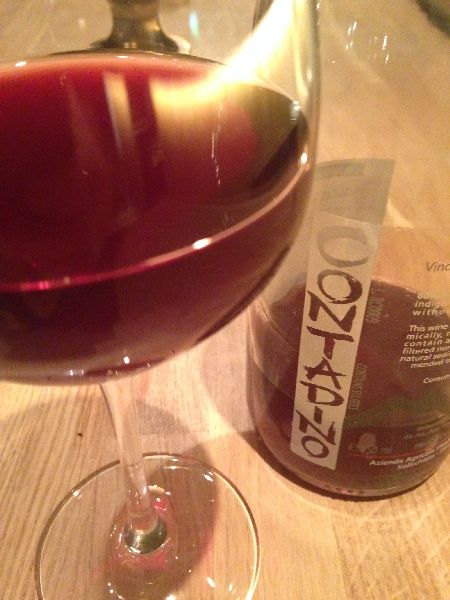
  • Azienda Agricola Sassotondo Ciliegiolo 2008 – Toscana, Italy
  • Bodegas Bruno Ruiz Villanueva 2008 – Castilla, Spain (no added Sulfur!)

Along with the addition of new titles, I also do my best to remove others to keep my list around 80 to 90 titles.  You can view the latest wine list here

Unsulfured wines – Dead or Alive??

January 18th, 2010

For those of you who follow my writings, my last publication was a producer profile on the philosophy and wines of Bressan from Friuli, Italy.  I have been speaking rather loudly about natural wines for some time now and I will again try and get my point across about how when well made, these wines are alive.  The wines of Bressan are no exception to this rule – they are most certainly alive and have one hell of a “shelf life”.

I opened his wines and began to write about them on December 26th, 2009.  I wrote about my findings and continued to taste the wines over the course of the next few days.  On December 30th, I left for Poland where I remained until the 13th of January.  I left approx 1/3 of a bottle of the 2006 Verduzzo  Fruilano and 1/3 of a bottle of the 1999 Pignol in my fridge.  On the evening I returned home, I removed the two bottles from the fridge and poured myself a half glass of each, and was not very surprised to find that the wines were still showing well. There was no sign of turning to vinegar and the wines were still very fresh and drinkable.  This was 18 days after I opened the wines!

Tonight I finished what was left of the Pignol, a whopping 22 days after being opened, and it was showing remarkably well. If I have to be fussy, I could say that the fruit had faded a tad…(but only a tad!).  This being said, the wine was very drinkable (which I did) and showed no signs of negative volatility nor had it become vinegar and in fact improved again once it sat in the glass for 5 mintutes… This is a 10 year old wine opened 22 days ago and I enjoyed it as much today as the day I opened it.. And it was made without the use of sulfur. Sulfur is a preservative that many conventional wine makers say you cannot make a stable wine without it… really?

Before my current position at Jacob’s Bar & Kitchen, where I have the largest selection of natural wines in Norway (and I sell them almost exclusively to the tune of about 250-350 bottles a month (perhaps more)), I managed what is considered the best wine bar in Norway.  A wine bar that boasted a wine list of over 500 titles and the “Wine Spectator Best of Award of Excellence”.  Although I managed to sneak a few natural wines on the list here and there, the wine consisted of mostly a very well selected group of  “conventional” wine makers. Although we prided ourselves in hand selecting small wine makers and growers, they very often used selected yeasts and sulfur in wine making.  I speak from the 4-years of experience managing this bar when I say that almost every bottle of wine that was open more than 3 or 4 days, ok sometimes 5 days, was sent to the kitchen as “waste”. This included expensive, well-made wines.

In my last 12 months of running the wine program for Jacob’s Bar & Kitchen, I sell almost exclusively organic, biodynamic an natural wines. I have a wine list of over 15 unsulfured wines, and I hardly send a bottle of wine to the kitchen as waste.

I have experience with other natural wines being long lived like the wines of Frank Cornelissen, Domaine Le Mazel (vertical tasting coming soon!) and Clos Roche Blanche (whose wines I have tasted over a one week period) for example.  I have deliberately set aside opened bottles of wine from the likes of these producers and tasted them over the course of weeks only to find that they almost always improve over the course of 10 days. I often find they level out and remain the same through the 14th day after being open, and most will begin to fade after day 18.

Why does this happen? I am not sure that I have the explanation for this. I feel that these wines are alive. Sulfur may be a preservative, but what kind of perservative kills its host?! Well-made wines without sulfur in my opinion are alive, more stable, have more interesting aromas and I am able to drink more and feel better the next day.

I just have to finish by saying that I simply write what comes spontaneously to me.. It’s what I feel.  In this case it’s also based on my experience and I challenge and welcome anybody who wants to discuss their personal findings on this subject, after all, I just want to learn as much as possible about the life that these wines possess.

Bressan Mastri Vinai Part V – 1999 Cru Pignol

December 29th, 2009

And along came the Pignolo grape, another very rare, refined, prestigious and indigenous grape of the Fruili-Venezia Giulia region in North-Eastern Italy.  This grape has the potential to make “Cru” level wines, like Bressan’s Cru Pignol, a stunning example of what this grape can do when care is taken in the vineyards and the winery.   According to Fulvio, the Pignol needs at least 8 years of aging to become a great wine, and after tasting his latest Pignol release, I would have to agree. At 10 years of age, this wine is just a baby. Drinking well now, but begging to be left alone for another ten.

Read the rest of this entry »

Bressan Mastri Vinai Part IV – 2004 Schioppettino

December 28th, 2009

The Schioppettino is a  red grape grown predominately in the Friuli-Venezia Giulia region of Italy.  Also known as the Ribolla Nera, Schioppettino literally means “gunshot” or “little crack”.  Records show that red wine made from the Schioppettino was used at marriage ceremonies back to 1282.  The grape was nearly lost to extinction thanks mostly to the phylloxera epidemic. Today, Bressan is one of the few wine makers making wine from the Schioppettino grape.

Soil composition: Calcareous mineral base, with high presence of iron sesquioxides. Such geological characteristics, associated with this scarce endowment of organic and other nutritional elements, forces the vines to a slow vegetative growth, resulting in an extremely low production, with an overall benefit to the MACRO and MICRO components of the grapes, and therefore the wines.

  • Total surface area: 3.88 HA
  • Planting year:  1982
  • # of vines/HA:  3086
  • Sun exposition: Southern, with rows oriented EAST-WEST
  • Harvest:  Permitted to slightly over-mature (so as to attain very high fixed acidity congenital to the species), harvested by hand.

Wine Making: Grapes are de-stalked and brought to must by way of soft-pressing; extremely long maceration with principal fermentation along with the grape skins, refrigerated with well water at a controlled temperature not exceeding 25C (77F).  After racking, the wine undergoes an ulterior 35 days of fermentation. The wine is then stored in stainless steel tanks, followed by aging for at least 2 more  years in 2000 liter oak casks. After bottling, groups of 500 bottles are placed in large chests, which are then stored in a temperature controlled warehouse for additional aging.

  • Alcohol content:  13%
  • Total acidity:  5.58 g/l

Date tasted:  Saturday December 26th, 2009 12:02 (PM)

Appearance: Medium dark brick red. Very very slight development showing. Medium intensity.

Nose: Very intense freshly ground black pepper. Blackberries and dark plums with mineral undertones. Floral and very intriguing. Hints of roasted meat.  Forest floor, musk and wild fruit. Very complex and intriguing nose.

Palate: Very intense on the palate as well with aromas of black pepper, wild dark berries, musk and hints of red berries with a mineral background. Some pleasant dried fruit aromas as well.  Medium tannins, medium to medium plus acidity carrying the wine to a long, very fresh finish.  Very fresh and very drinkable.  This has always been one of my favorite wines of Bressan..  Excellent with lamb!

Bressan Mastri Vinai Part III – 2004 Pinot Grigio

December 27th, 2009

Soil composition: Calcareous mineral base, with high presence of iron sesquioxides. Such geological characteristics, associated with this scarce endowment of organic and other nutritional elements, forces the vines to a slow vegetative growth, resulting in an extremely low production, with an overall benefit to the MACRO and MICRO components of the grapes, and therefore the wines.

  • Total surface area:  1.41 HA
  • Planting year:  1990
  • # of vines/HA:  4630
  • Sun exposition:  Southern, with rows oriented NORTHWEST-SOUTH
  • Harvest:  Physiologically correct, by hand

Wine making: Grapes are de-stalked and soft-pressed, with cold decanting of the must and the total elimination of the entire part decanted.  20-25 days cold fermentation. Subsequent slow fermentation of the fine lees in stainless steel tanks; then aging for 12-15 months before bottling.  Bottles are placed in groups of 500 in large chests that are then stored in temperature controlled warehouses for additional aging.

  • Alcohol content:  13%
  • Total acidity:  5.20 g/l

Date tasted:  Saturday December 26th, 2009 12:02 (PM)

Appearance: “Ramato” – Copper-like color, but perhaps a bit lighter than the Verduzzo Fruilano with a tad more brownish tinge.  Medium plus intense glow.

Nose: Less intense than the Verduzzo Fruilano and more “feminine”. Fresh apricots and orange peel. Hints of star anise and mineral. Medium complex

Palate: Medium intense wine with orange citrus, hints of apricot, star anise and mineral.  Well-integrated alcohol, very fresh and drinkable. Very mild tannins, medium plus acidity with a long, mineral, fresh finish. One of the best Pinot Grigio’s I have ever tasted, if not the best.

Drinking very well now, but can be stored up to 5 years in my opinion. Another winner from Bressan…

Bressan Mastri Vinai Part II- 2006 Verduzzo Friulano

December 26th, 2009

In Part I of the Bressan producer profile, I discussed in depth the philosophy of Fulvio Bressan.  Now I will present some of his wines which I had the opportunity to taste.  Bressan is an artisan wine producer making wine in extremely small quantities, between 0-50,000 bottles per year.  They specialize in the production of indigenous grape varieties, including the wine being tasted for this tasting note.

The Verduzzo (Friulano) grape is indigenous to Friuli, but can also be found in the Veneto.  According to Fulvio, it is very rare to find dry versions of the wine made from this grape (only 2 or 3 other producers in Friuli  make it dry).  The Verduzzo grapes is unusual in that it has high tannins like you might find in a red wine. Therefore, if the grape is harvested too early, the tannins can be quite bitter and harsh, and therefore wine makers began adding sugar to the wine to make it sweet, thus masking the bitterness of the tannins. In Fulvio’s opinion (and in mine as well), a sweet wine will not be balanced when made in this way.  Fulvio instead picks his grapes at the optimal ripeness (because he is patient), and vinifies the wine as a dry wine.

The first thing you notice when pulling the cork out of the bottle is the quality of the cork itself. Fulvio swears by the quality of his corks and says that if you ever get a corked bottle, simply return the cork and he will refund you.

Read the rest of this entry »

Bressan Mastri Vinai Part I- A Producer Profile

December 24th, 2009

BRESSAN mastri vinai
Via Conti Zoppini, 35
34070 FARRA D’ISONZO (Gorizia)
Italy
Tel. +39 – 0481 – 888131
Fax +39 – 0481 – 889824
E – mail: bressanwines@tin.it
www.bressanwines.com
www.bressanwines.it

I haven’t done too many “producer profiles” so far, and I suppose that’s because I really have to believe in the philosophy of the producer before I feel compelled to write about them. Then, I really have to like the wines. I may have a favorite bottle, but overall, I tend to enjoy all of the wines the producer makes. Usually the wines will have a certain signature that says they all belong to a certain family – in this case we’re talking about the philosophy and wines of Mastri Vinai Bressan, and that signature is one of  passion and patience. Patience enough to release a wine that, although is certainly age worthy, is actually ready to drink upon release. And this is why I have selected to write about Bressan.

The Bressan family owns about 20 hectares in the Friuili-Venezia Giulia appellation in North-Eastern Italy on the border to Slovenia.  The first thing that struck me about this producer was of course the wines.  Indigenous varieties that one does not taste every day, such as the Schioppettino, Pignol and Verduzzo Friulano. The second thing that struck me was the vintage of some of these wines which went back as far as 1999 (the latest release of the Pignol, for instance). The third thing that struck me was the philosophy of this producer. A philosophy very much in line with what I feel a wine producer’s philosophy should be. Read the rest of this entry »

Unfiltered Wines & Deconstructed Grapes

December 18th, 2009

2009-06-02_1803

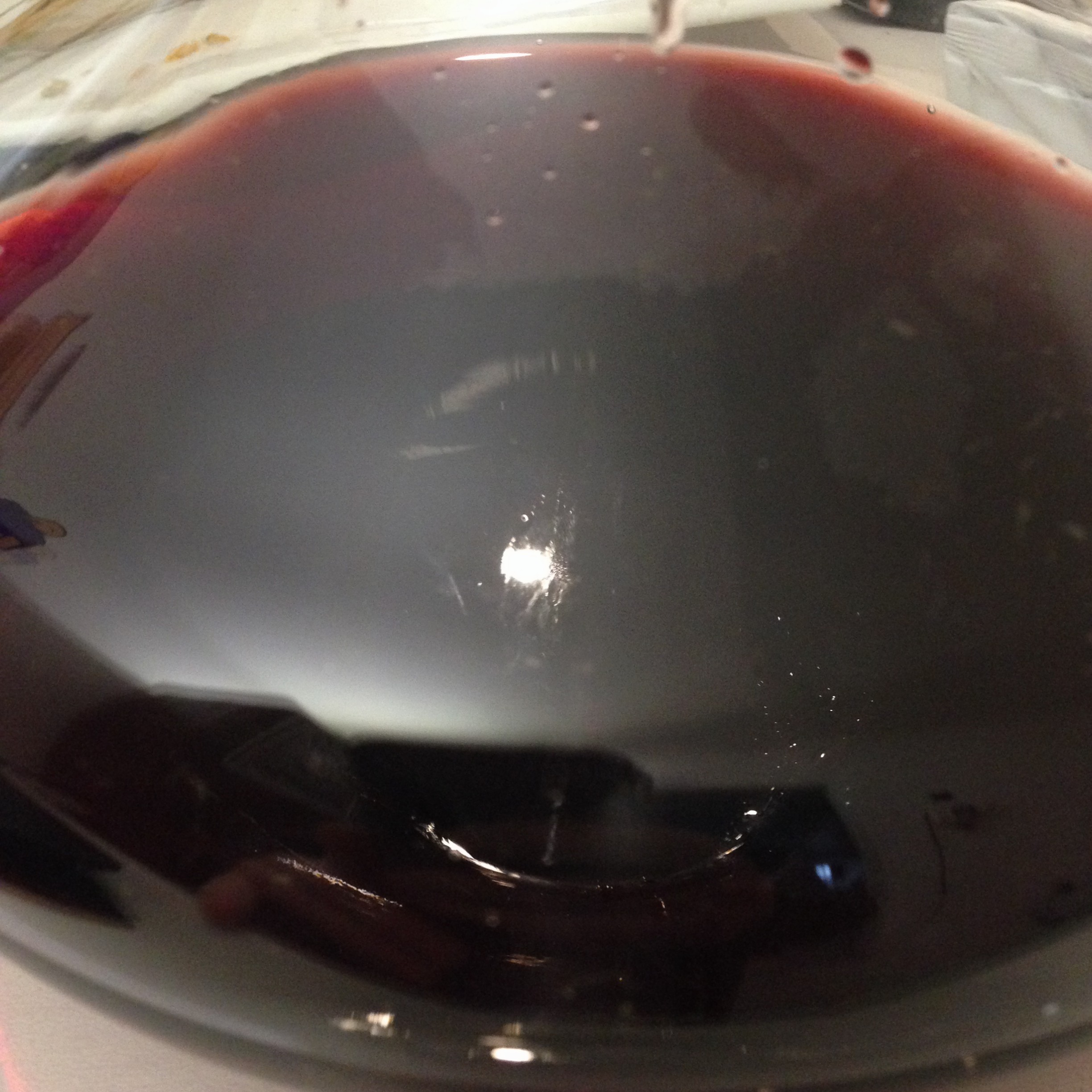
And along came natural wines. Pure, fermented “grape juice”. I find it difficult these days to drink wines that I can see through.  I’m not saying I want to have a glass of super-dark, jammy, inky wine.  In fact, I like wines that are lighter in 2009-11-06_24702009-11-06_2499color and fresher in taste.  What I am actually saying  is, I prefer my wines to be totally unfined and unfiltered.  I love cloudy wines, wines with bits and pieces of “deconstructed grapes” floating around freely. A glass of wine that I can’t see through because of the living particles afloat in the glass.  I believe that fining and filtering a wine is partly to blame for the “death” of a wine, along with over-sulfuring. Read the rest of this entry »

A Tasting Note: Sean Thackrey Pleiades VIII

December 10th, 2009

Sean_Manka's_2003.V3

“Why would you want to drink a wine that, if it were a person, you would be bored of talking to?”
-Sean Thackrey

Sean Thackrey’s property is in Bolinas,  a one hour-drive north of San Francisco in western Marin County. After harvesting, Sean typically waits 24 hours before fermenting.  Although his wine-peers think he’s crazy, he tells them that he’s merely being guided by his collection of old and ancient texts relating to wine.  You can read more about this art-dealer-turned master vigneron here. I also recommend spending some time on Sean Thackrey’s website, which is very unique. Read the rest of this entry »


temperture
knows
microprocessor
womens
flooding
vinny
warren
mechanicsville
thornhill
prayers
beak
automatically
reservoir
enemies
sellers
kawasaki
browns
pleasanton
gaston
tyre
ionizer
fryer
filled
orthopedics
vessels
brazil
merlin
qt
niles
solicitors
blink
stores
pcl
choice
waterproofing
diagnostics
jenifer
jab
histology
literacy
wrath
schooner
wma
aboard
inter
indulgence
staind
soak
investments
juli
steady
terence
crest
survive
paraguay
kayaks
viewsonic
shitting
periodicals
shoppers
contribution
pontiac
gilles
enfant
explicit
trois
skiing
sandler
slug
cupcake
commercial
firestone
til
counts
robot
reclining
luxe
killswitch
spouse
sandpoint
attraction
checklist
jerky
soul
ultima
clare
reebok
abrasive
witness
imperial
pennington
titanic
caterpillar
braces
expedia
insane
confederate
alex
custom
wording
launch
switched
hyatt
jeremy
shy
hiring
jab
salomon
adirondack
shultz
u2
dooley
ter
tracer
kyoto
quit
guaranty
autoclave
bjork
youngstown
sunfire
miners
falcons
vertical
nih
dominique
kenosha
loren
landers
martini
microwaves
bunny
alloy
classic
heated
attendant
suunto
shultz
partnership
dementia
rosenthal
release
gregory
maxim
powerbook
electrode
hotel
lexmark
geral
india
rhinestones
park
mansion
bandage
forestry
bowser
av
pairing
deptford
kruger
greens
hdpe
uxbridge
isdn
exposure
sicilian
waddell
burmese
sheena
jcpenney
valid
linux
caesars
enviro
ringo
critic
fake
yearbook
decrypt
holding
dig
montecito
canyon
aggie
earnest
regions
adhd
needed
gastro
ebay
increases
cries
wav
suit
quebec
craiglist
fundraisers
attractive
trimming
conneticut
tester
ronald
mutant
digging
clovis
designing
logical
sharma
propulsion
saints
christiana
psychiatric
hin
pentax
bowes
pomeroy
collie
retarded
tappan
engraving
guages
woodwork
plano
elemental
starts
pcb
raised
yiff
wrapped
microsystems
dm
camoflage
menu
sounds
alpha
potatoe
animals
brokerage
savvy
owa
infringement
amortization
turning
seekers
mce
plows
frames
ninja
birthstone
vita
crop
tonight
swings
executives
stylish
jbl
chime
earring
funniest
camoflauge
carvings
hilfiger
millionaire
workflow
gatwick
intersection
purdue
travis
chicagoland
walkthru
lockdown
traders
southampton
lotto
railing
svc
hiroshima
parabolic
yankovic
coolant
centerville
brantford
compaq
batavia
captial
doomsday
replaced
keyboarding
manifest
southington
spill
blvd
sprout
hawker
written
sunscreen
wreath
galaxies
significance
path
imdb
nina