Archive for the ‘natural (almost)’ Category

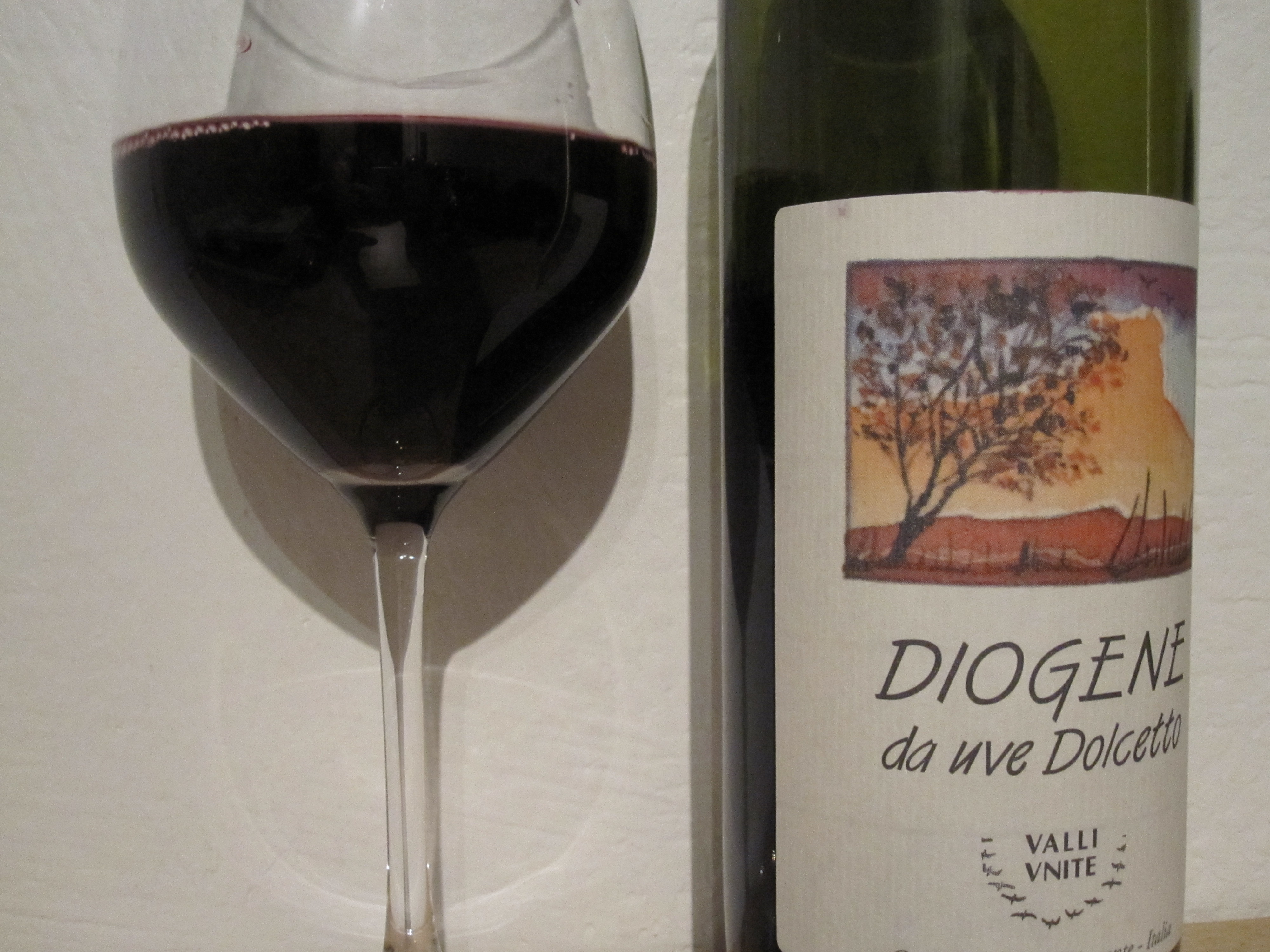
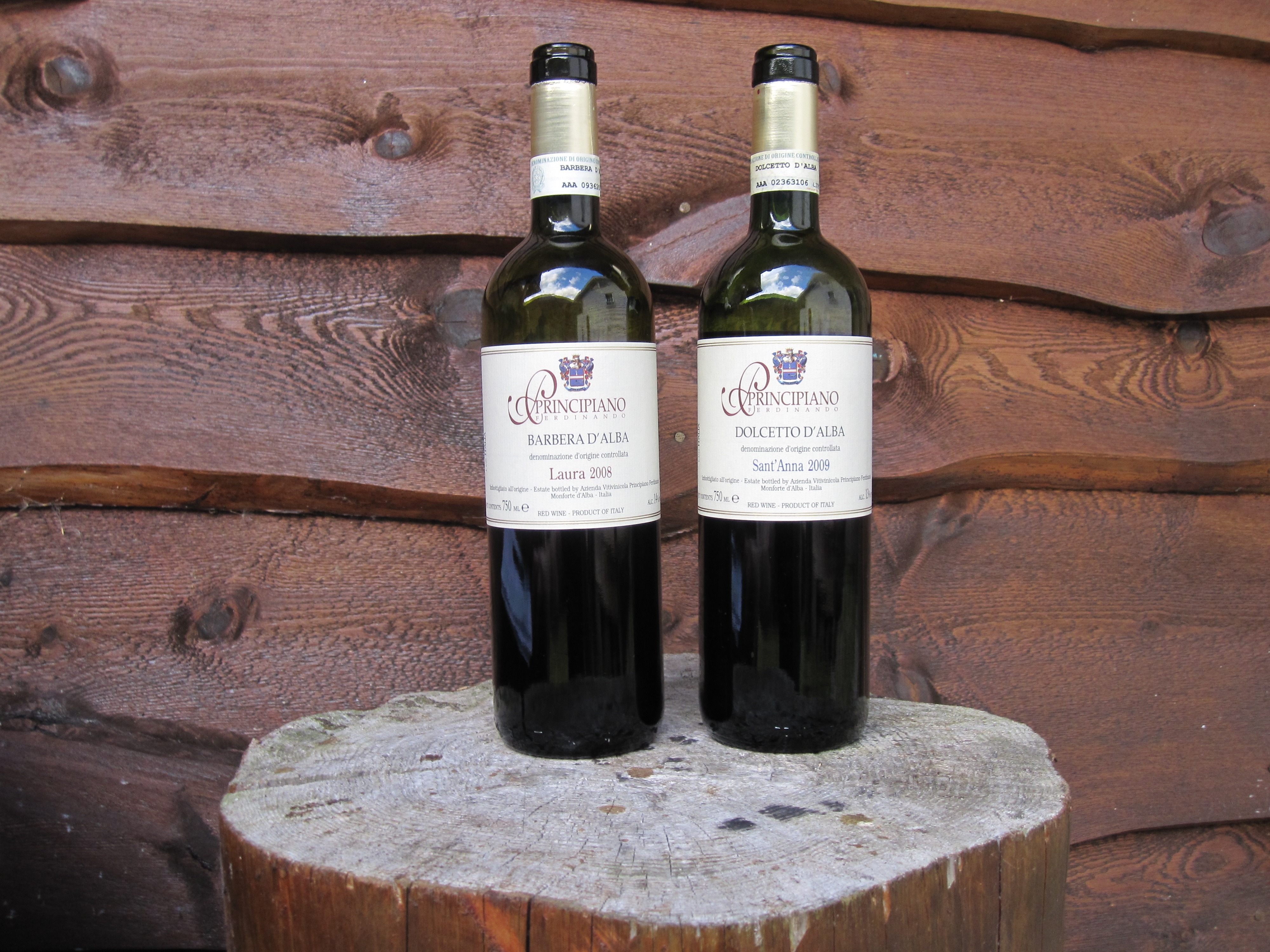
Two Tasting Notes: Ferdinando Principiano’s Dolcetto & Barbera

Wednesday, September 1st, 2010

The estate, located in Monforte d’Alba, was founded in the 1950′s by Ferdinando’s father Americo.  Ferdinando took over the estate from his father in 1993 and since 2004, Ferdinando has removed all chemicals from the vinification process, including sulfur (which he has almost completely eliminated except for a pinch in his Barolo).  His viticulture practice also respects nature and the grapes she gives by eliminating all industrial fertilizers, herbicides, etc.  Natural yeasts spontaneously ferment his wines without the control of temperature.  The resulting wines are fresh, juicy and easy to drink on their own, but just like most real wine, pair fantastically with food.  His 2005 Barolo Serralunga was a perfect companion with a fresh whale course that we were serving up at the restaurant last month.   Approximate annual production is about 50,000 bottles total.

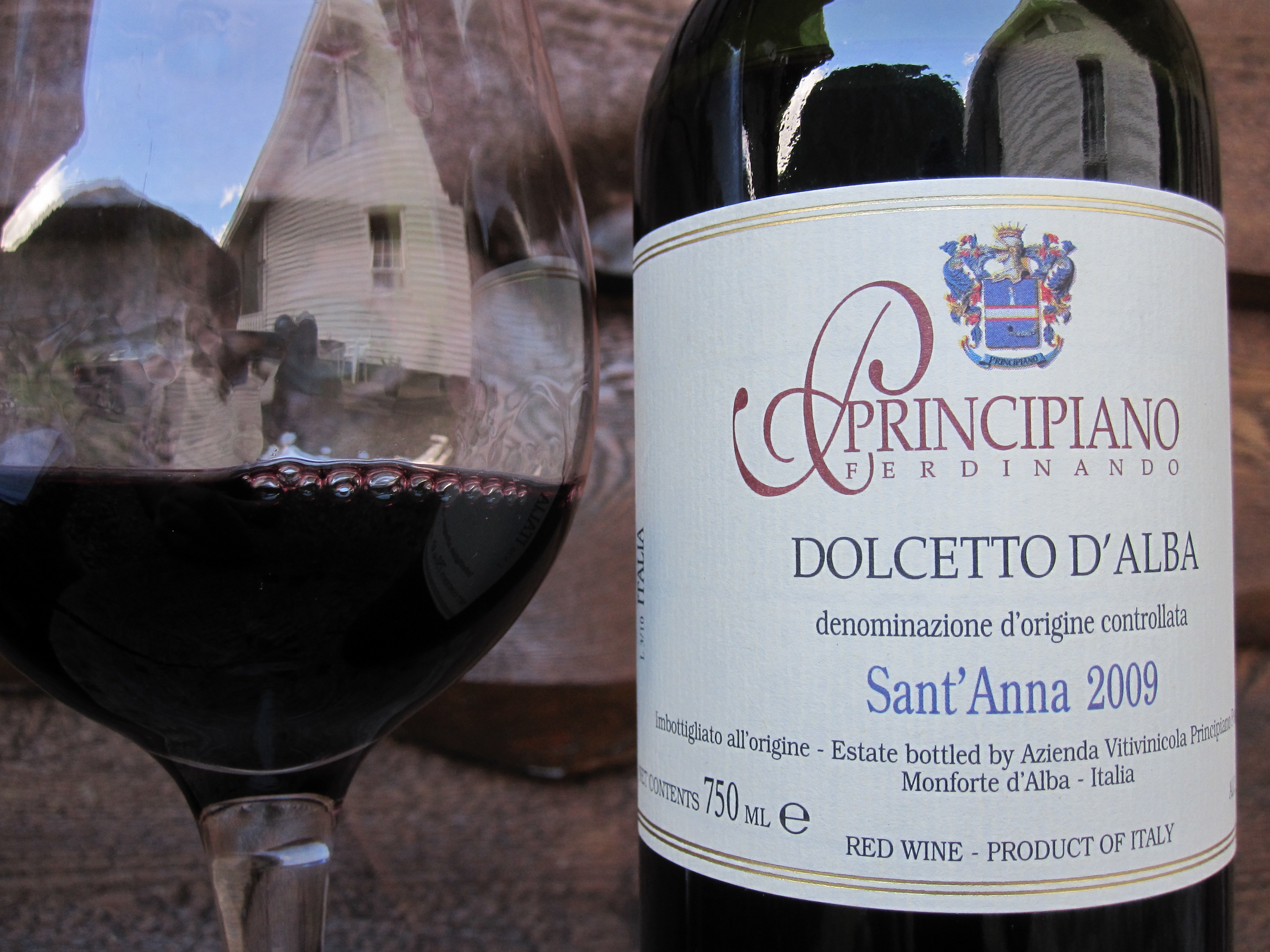
2009 Dolcetto d’Alba Sant’Anna

The grapes for this wine come from the Sant’Anna vineyard in Monforte d’Alba.  The grapes are planted with a density of about 5000 vines/HA at an altitude of about 400 meters above sea level.  Harvest occurred at the end of September and of course is by hand.  Fermentation in stainless steel was spontaneous and continued on the skins for about 20 days without temperature control.  The wine then remained in the tanks for about 10 months before being bottled.  Approximately 5000 bottles were produced.

Date tasted: July 15th, 2010 1800

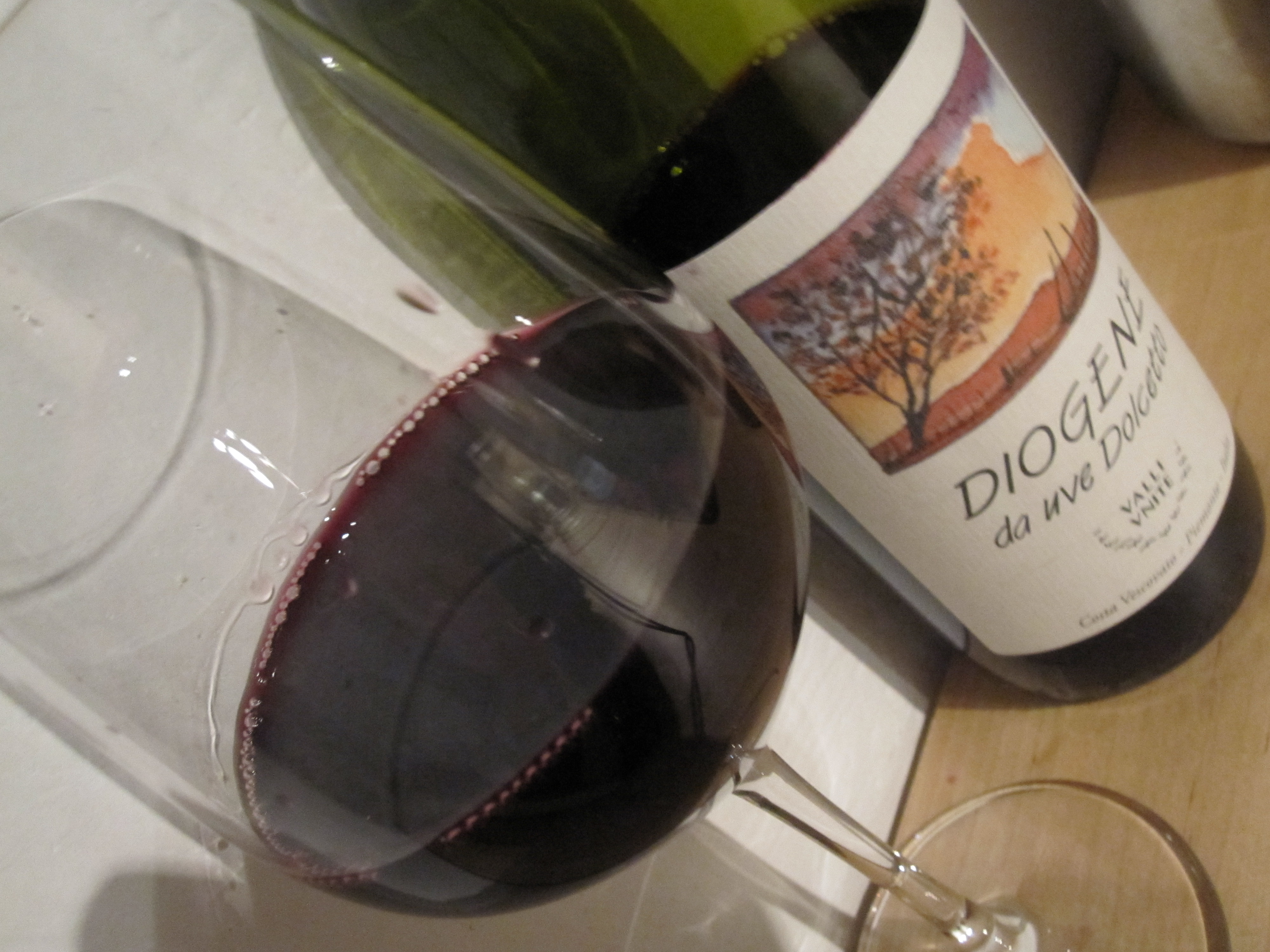
Appearance: Med dark  red with purple edges. Very young looking, and of course it is!

Nose: Very open and floral.  Medium intense nose of raspberries, cherries and plums.

Palate:  “sweet” red fruit. Raspberries & cherries. Medium tannins and medium acidity.  Very balanced and well-integrated alcohol.  Very fresh wine with a medium-long finish.

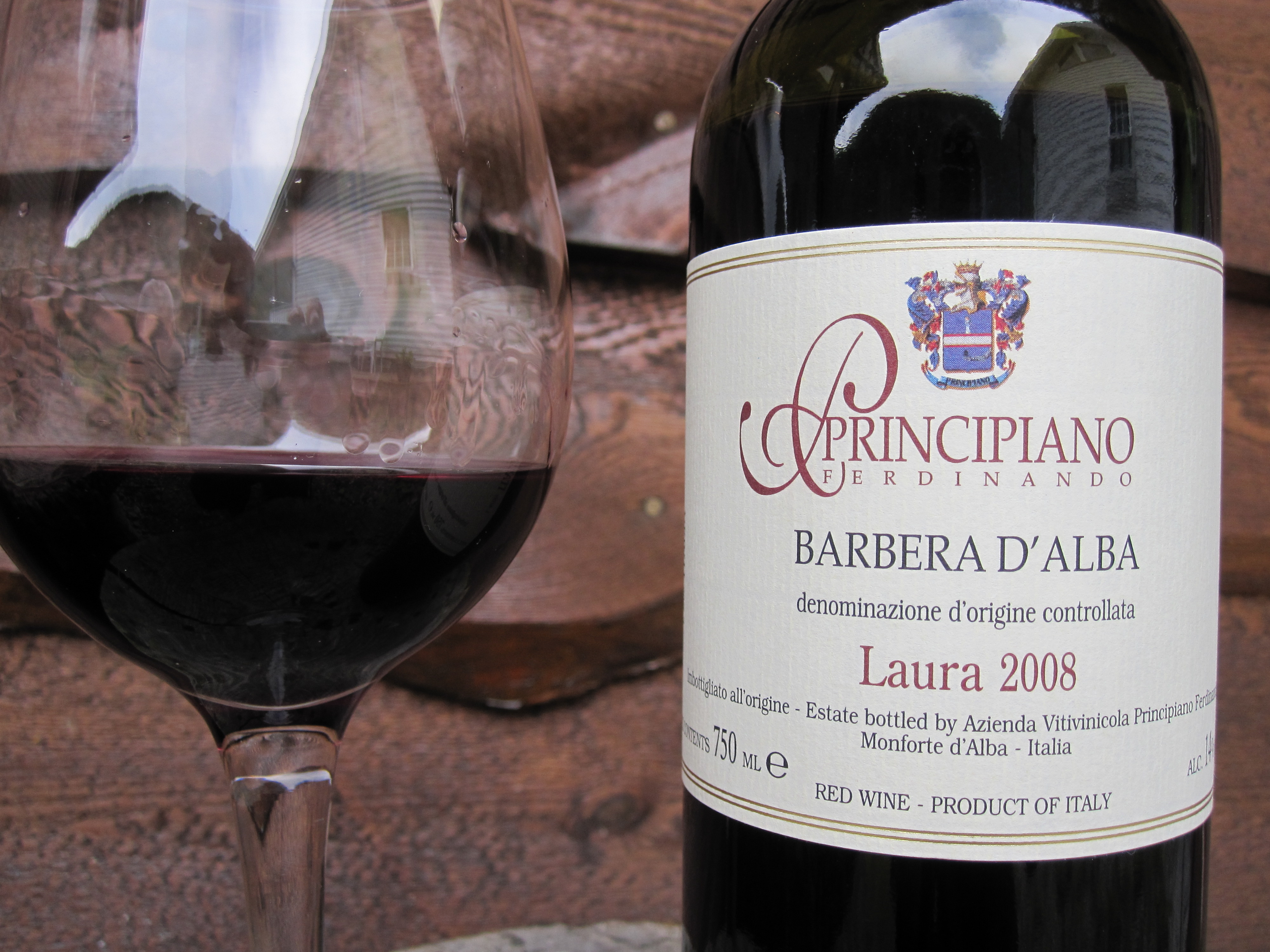
2008 Barbera d’Alba Laura

The grapes for this vineyard come from a tiny 1ha vineyard in Serralunga d’Alba.  Planting density is about 4000 vines/HA at an altitude of about 400 meters above sea level.  Exposure of this small vineyard is S-SW.  The grapes are harvested by hand then spontaneously fermented without temperature control in stainless steel tanks.  The juice stays on the skins for about 30 days, with manual remontage of the grapes.  The wine is left in the tanks for 10 months following fermentation.  About 8000 bottles produced.

Date tasted: July 15th, 2010 1800

Appearance: Med-dark red with purple, youthful edges

Nose: Slightly reductive and closed initially.  With some swirling, the wine opens up to reveal blackberry, black currant, raspberry and purple gooseberry.  Hints of blueberry.  Very slight floral component. Medium intense

Palate:  Blackberries initially, then mostly red fruit.  The red fruit revealed itself much more on the palate then on the nose.  Mild tannins with medium + acidity.  Well Balanced fruit & acidity.  Alcohol is pretty well-integrated, but you can feel it a bit at the back of the throat with a slight sweetness (this wine needs some grilled veggies or meat!)

Until this year, Ferdinando’s wines were not available in Norway.  But they are now being imported by a small importer focusing on organic, real wines.  The Dolcetto will be available on the main wine monopoly’s shelves for about 159 Norwegian Kroner (approx $25) sometime this month.

Welcome (Back) to Georgia Part III – Prince Makashvili Cellar

Sunday, August 15th, 2010

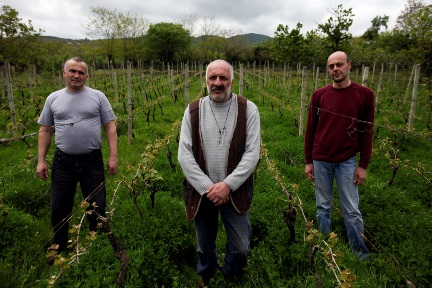
Prince Makashvili Cellar - Soliko Tsaishvili, Irakli Pruidze & David Kapanadze

Date tasted:  July 11th, 2010 13:45

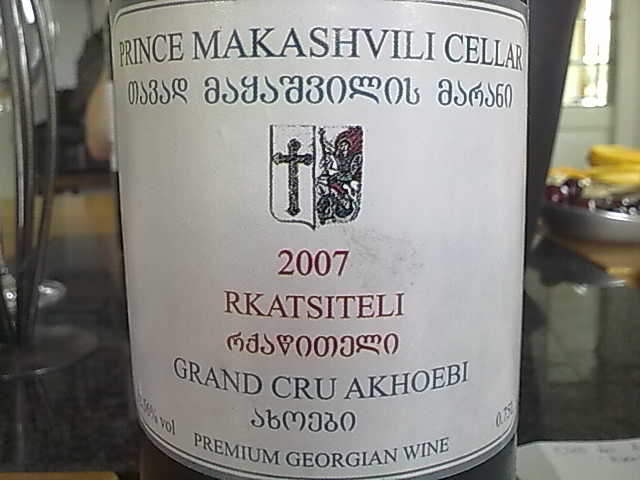
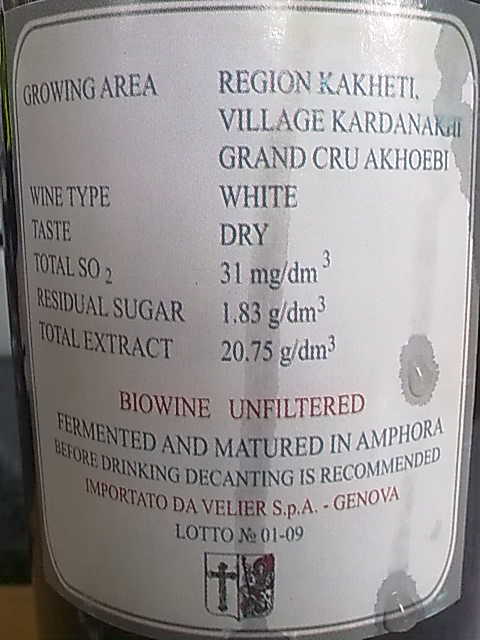
This grapes for this wine come from the Grand Cru vineyards of Akhoebi, in the village of Kardanakhi in the low hills of the Kakheti region.    The vineyard covers 1.9 HA and are farmed biodynamically and harvested by hand.  The soil is  black  and carbonate-rich.  The vines are widely spaced at approximately 2500 plants/HA, trained in a double Guyot pattern.  The vineyard is planted with approximately 90% Rkatsiteli, 4% Mtsvane, 4%Khikhvi and a red varietal called Saperavi, all on original (non-American) root stock. Harvest is done by hand, the grapes pressed softly.  The wine is spontaneously fermented and macerated for 6 months with skins in Qvevri.  After skin and stalk separation, the resulting wine is stored in smaller Qvevri for a further 12 months.   Bottled without filtration.  In 2007 approximately 20hl/ha was produced, or 1200 bottles.

90% Rkatsiteli 6% Mtsvane 4% Khikhvi
Total SO2 is 31 mg/l (31ppm)
Residual Sugar is 1.83 g/l

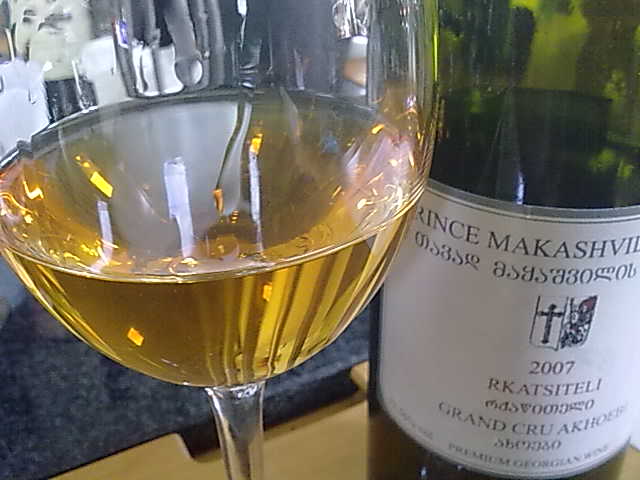
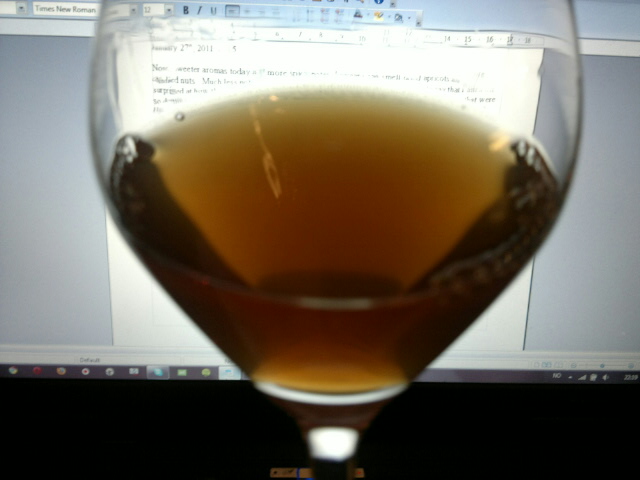
Appearance: Apricot-orange hued with golden edges.

Nose: Herbs and spices (lavender & rosemary)  layered on top of  yellow fruit.  Sweet arctic cloud berries with strawberry (yes, strawberry) notes.

Palate: Great focused fruit. Apricots mostly. Medium tannins with medium level acidity.  30+ second finish. Bone dry.

The Grand Cru Akhoebi was my favorite of the three I wines tasted.

Date tasted:  July 11th, 2010 13:45

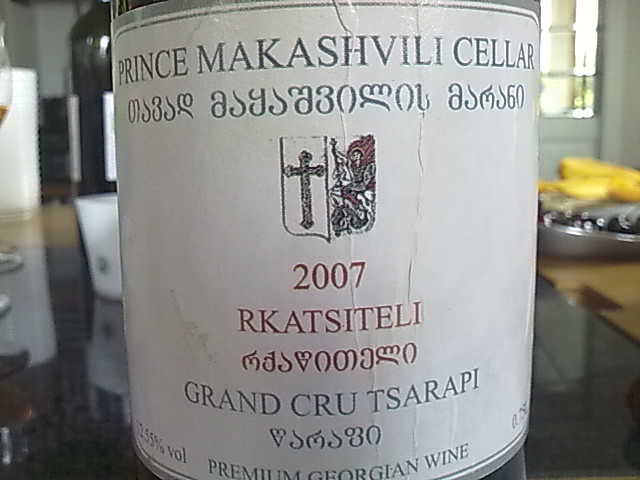
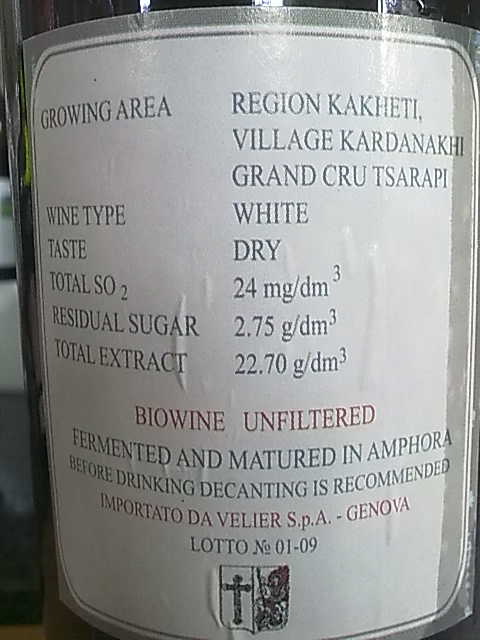
This grapes for this wine come from the Grand Cru vineyards of Tsarapi, in the village of Kardanakhi.  The vineyards cover 1.25 HA and are farmed biodynamically and harvested by hand.  The wine is spontaneously fermented and macerated for 6 months in Qvevri, then stored in the Qvevri for a further 12 months.   Bottled without filtration, and on this particular bottle, this was quite obvious.  Approximately 20hl/ha is produced, or about  1200 bottles.

100% Rkatsiteli
Total SO2 is 24mg (24ppm)
Residual Sugar is 2.75 g

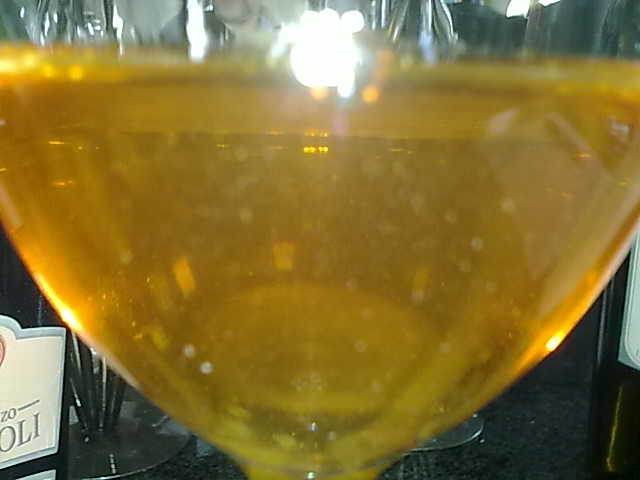
Appearance: Darker and more copper-hued with loads of visible sediment :-)

Nose: Sponty aromas with apricots, with less herbs and spices than the Akhoebi Grand Cru.  My favorite on the nose of the three wines because it had that perfect balance between fruit and wild aromas with just enough minerals to give the wine a serious edge.

Palate: More vinous than the Akhoebi – thick, structured and concentrated.  Quite a serious wine and very mineral.  Medium + tannins and acidity with a long finish.  Bone dry, elegant fruit.

This wine wanted desperately to be my favorite, but it came in second behind the Akhoebi. However, with a few years more of cellaring, this may show even better than the Akhoebi.
My overall impressions were that these three Georgian wines I tasted were of top quality and quite serious food wines.  I would have no problem drinking them alongside my Friulian & Slovenian favorites.

Welcome (Back) to Georgia Part II – Clos des Amandiers

Thursday, August 12th, 2010

Now, back to the future (today) and the wines of Georgia, all hailing from the Kakheti region located in Eastern Georgia, the driest of the 3 regions.  It is the largest wine region in Georgia spanning over  11,000 square kilometers.

All three wines were (mostly) of the same grape variety, Rkatsiteli (or Rkatziteli – pronounced rkah-tsee-tely, and directly translated means “red vine”).  The only Georgian wine experience I have had before today, was  tasting some half-sweet (non-representative) red wine that was poured from a decorated clay bottle, and let’s just say it wasn’t a wine to remember. In fact, I only remember the bottle to this day.   These three wines were not at all what I had anticipated. They were aromatic, complex, fresh and tannic wines that would do well with food.

This project started about 4 years ago when a group of Italian wine and spirit merchants (Luca & Paolo Gargano) from Genova purchased a 1.8ha vineyard in the village of Mararo.  With the help of Jean Jacques, a friend of Nicolas Joly, and a local farmer named Nodar Shinjiashvili who was  cultivating old varieties of cereals biodynamically, Clos des Amandiers was born.  In 2007 they released their first vintage, the first wine in my tasting.

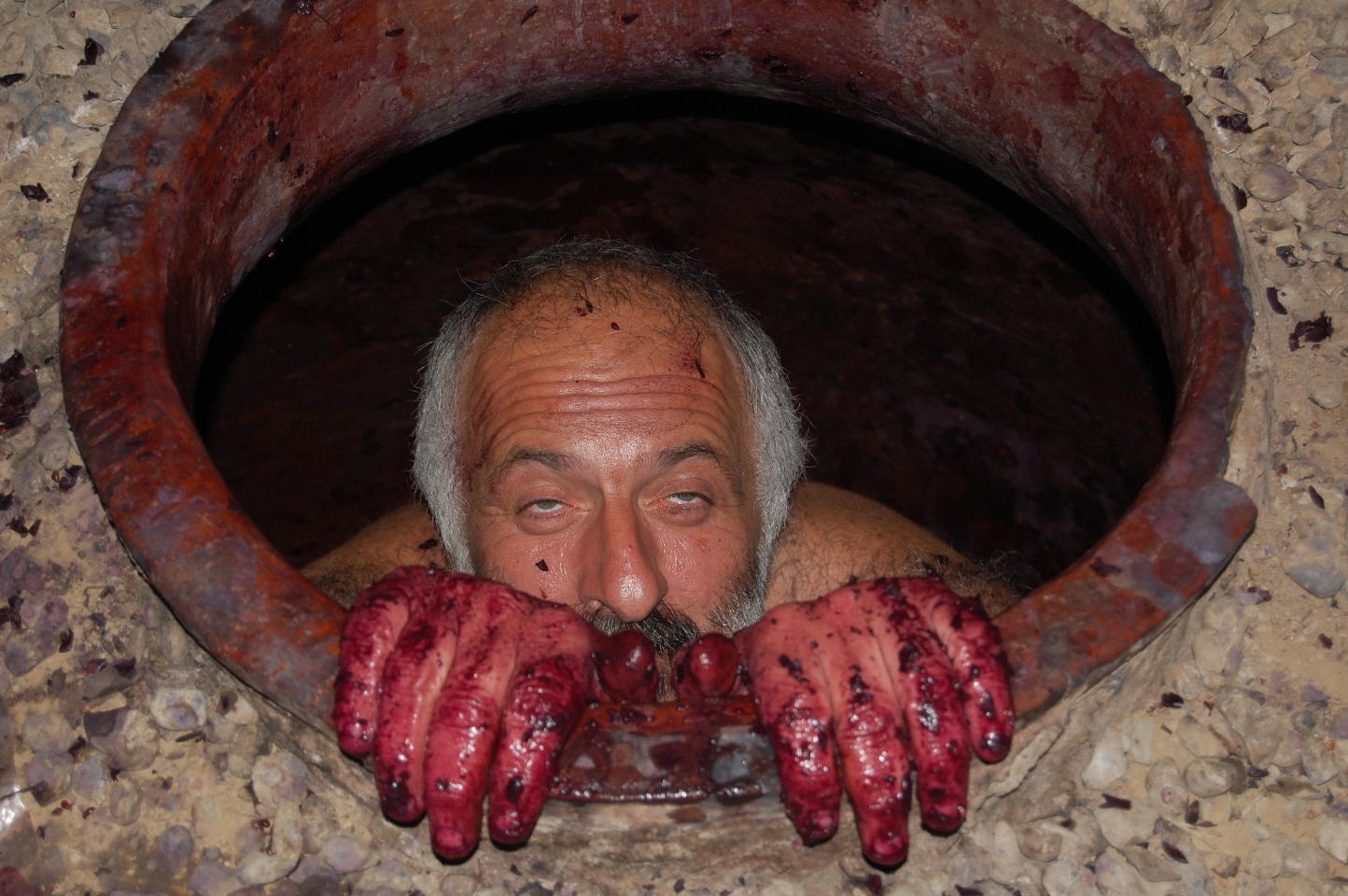
The vines for this wine share the space with almond trees and are cultivated biodynamically.  Harvest occurred in October, the grapes subsequently softly pressed.  Fermentation occurred spontaneously with indigenous yeasts  in old Qvevri without temperature control.  Maceration lasted for six months in these Qvevri then transferred to smaller, non-buried Qvevri for 12 months maturation.  The wine was then bottled without filtration and left to age in the bottle.
Date tasted:  July 11th, 2010 13:45

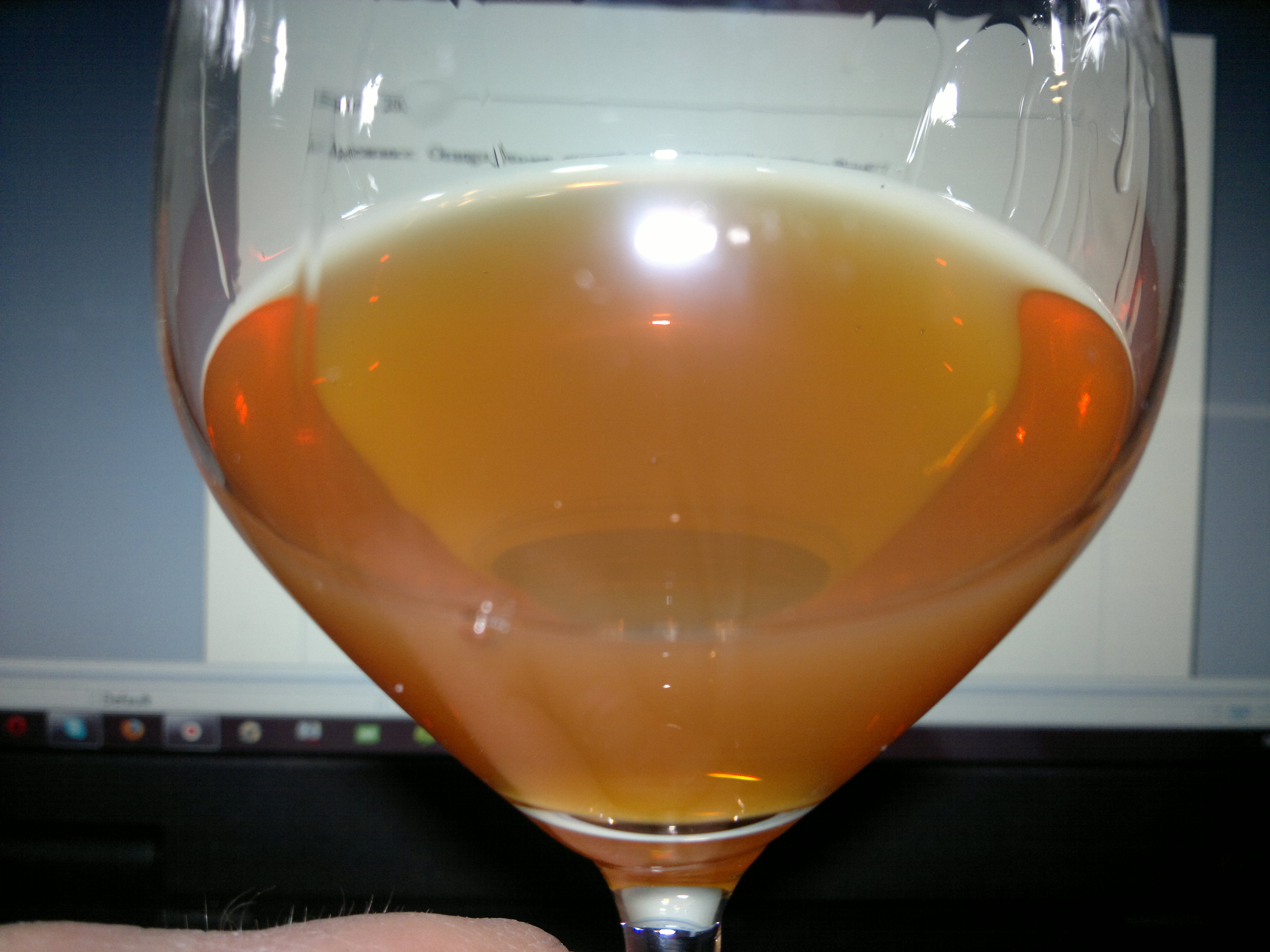
Appearance: Quite a dark orange hued wine with copper and amber tones (think Cat’s Eye gemstones)

Nose: Wow, intense. Quite a sponty and wild nose of dried peaches, raw almonds, marmalade and yellow plums. Hints of jasmine and lavender emerge after about an hour.

Palate: A delicate and elegant entry. Red apples (yes, red) and yellow apples. Medium ++ tannins, medium + acidity (tangy). I found more fruit on the nose then I did on the palate.  The wine had a 30 second+ finish with dominating tannins and toast.

I feel that this wine would be very suitable to food.  Especially dishes with high contrasting flavors and moderately spicy food (because of the fruity aromas in the wine).  A dish specifically recommended to me would be yogurt-marinated baked mutton (meat of mature sheep).  My experience with orange wines is that they merry quite well with food in general, from your sweeter, more aromatic dishes, to meat dishes and finally with cheese.

Food & Wine Pairing – Clos Roche Blanche Cuvée Pif

Tuesday, June 1st, 2010
THE WINE:
Clos Roche Blanche Cuvée Pif 2008
50% Cot (Malbec) & 50% Cabernet Franc
Touraine, France
12% Alcohol
Price in Norway:  129,90 NOK ($20)
THE FOOD:
Veal ribs
Mashed potato with lemon zest
Mild sour cream chipotle sauce
Wild herbs

A milder version of the classic, roasted, slightly smoked chipotle pairs well with the earthiness found in the Cot.  The wine has just enough tannic structure to support the fat on the veal rib. An interesting dish that works very well overall with the wine.

Jacob’s Bar & Kjøkken Wine List Updated for April 2010

Saturday, April 17th, 2010

Lot’s of new wines this month. La Stoppa’s Ageno brings my “orange wine” count up to 7 titles.  I would like more orange wines because they’re not only food friendly, they’re addicting as crazy!  There are many out there to chose from, but most I am afraid are not good in my opinion, merely fashion statements at most.

I am happy to have exclusivity on the Domaine de La Gramière wines in Norway (at least on this first shipment) – great wines made by some fellow ex-pats living in Southern France. These “sponty” wines have super clear fruit and great freshness!

A truly amazing Grüner by another new comer to Norway, Meinklang.

And, a new Dolcetto to replace Luca Roagna’s Dolcetto, one of my favorites up to now.  Principiano’s wines, including this Dolcetto, are brand new to Norway, and I feel will take no time at all to get discovered.

Over the course of the next month, I hope to add some (more) exciting rosé’s to kick off our Norwegian Spring and Summer! (Although as I write this post, the spring has all but vanished as I look out my window at the hail coming down from the sky!)

Here are my new additions:

  • Domaine d’Elise Chablis 2008 – Lutte Raisonée – Burgundy, France
  • Meinklang Grüner Veltliner 2009 – Biodynamic & one hell of a Grüner for the money! – Burgenland, Austria
  • La Stoppa Ageno 2005 – A natural orange wine – Thanks Tomasz! – Emilia-Romagna, Italy
  • Weingut Langmann Schilcher Klassik 2009 – Steiermark, Austria
  • Stéphane Tissot Poulsard Vieilles Vignes Sans Soufre 2007 – Nice, delicate fruit.  A hint of oak – Jura, France
  • Domaine de La Gramière Côtes du Rhône 2005 – Close to natural, just a pinch of sulfur! – Southern Rhône, France
  • Domaine de La Gramière Peter’s Vineyard Syrah 2007 – Close to natural, just a pinch of sulfur, please decant me and give me some air!Southern Rhône, France
  • Domaine Leon Barral  Faugères 2007 -  Languedoc-Roussillon, France
  • Ferdinando Principiano Dolcetto d’Alba Sant’ Anna 2008 – Biodynamic with  just a pinch of sulfur. Super clear fruit! – Piemonte, Italy

Click here for new wine list

Jacob’s Bar & Kjøkken Wine List Updated for March 2010 – 5 Unsulfured wines added!

Thursday, March 11th, 2010

Here’s the latest update.  Even though I practically eliminated my entire Champagne selection, this month I have added a new Champagne. Drappier’s Brut Nature is organic and made without the addition of sulfur dioxide.  This isn’t the only sans soufre wine added this month!  4 more un-sulfured wines were added (for a total of 5) and one that has no detectable sulfur!  The most stunning Beaujolais Nouveau I have ever tasted also arrived at Jacob’s yesterday!

  • Drappier Brut Nature – Sans Soufre!Champagne, France
  • Murgo Spumante Metodo Classico Non Dosage 2006 – 100% Nerello Mascalese! – Mt. Etna (Sicilia), Italy
  • Crêt de Ruyère/Cathy & Jean-Luc Gauthier (with Jean-Marc Brignot) “biojô nuovo ;-) ” Beaujolais-Villages Nouveau 2009 – No detectable sulfur! – Burgundy, FranceA stunning Beaujolais Nouveau  like only Jean-Marc Brignot can bottle!!
  • Domaine Le Mazel Cuvée Raoul 2008 – After being sold out of the 2007 for about 6 weeks, the 2008 is finally here! – Southern Rhône, France
  • Domaine des 2 Ânes Fontanilles 2006 – Corbieres, Languedoc-Roussillon, France
  • La Treille Muscate (Catherine Marin-Pestel) L’Effrontée Magnum 2007 – 100% old vine Carignan – no sulfur added!! – Languedoc-Roussillon, France
  • Domaine Robert Sérol Les Vieilles Vignes 2009 – 100% Gamay – Loire Valley, France
  • Domaine Robert Sérol (L’)Incorruptible 2009 – 100% Gamay, No added sulfur!! – Loire Valley, France
  • Bressan Cru Pignol 1999 – 100% Pignolo grape, No added sulfur!! – Friuli-Venezia Giulia, Italy

Click on the Treille Muscate Label below to check out the latest wine list!


Jacob’s Bar & Kjøkken Wine List Updated for February 2010 – With Photo!

Sunday, February 21st, 2010

Here it is! The latest wine list updated for February.  Remember, I’m not just adding titles to an ever-growing wine list. Very often for every title I add, one has disappeared from the list. Since last fall, I have reduced the list by about 20 titles. I try to keep my list dynamic so that my guests (and I) don’t get bored!

As I have mentioned in a past entry, I am reducing the number of Champagne titles on my list and increasing the number of sparkling wines. I feel that there are so many interesting sparkling wines available at competitive prices and from interesting wine areas. I have added one sparkling wine to my list in February and I expect to add 3 or 4 more titles next month depending on availability.

New to the wine list this month:

  • André et Mireille Tissot Crémant Indigène Brut – Jura, France
  • Domaine Bott-Geyl Riesling Schlossberg Grand Cru 2008 – Alsace, France
  • Château de la Gravelle Muscadet Sèvre et Maine L’Ancestrale 2004 – Loire, France
  • Ciro Picariello Aglianico Zi Filicella 2007 – Campania, Italy (Single vineyard, planted in 1925 (see photo just below this description).  Spontaneous fermentation.  20-25 days skin maceration.  Only steel and cement for fermentation and storage (24 months in cement). Less than 40mg per liter SO2.  Bottled without filtration.)

Ciro Picariello Aglianico Zi Filicella Vineyard - Planted in 1925

Click here to see the wine list in its entirety!

Jacob’s Bar & Kjøkken Wine List Updated for January 2010

Sunday, January 24th, 2010

January in Norway is typically a slow month which also means that not many new titles have been added to the wine list this month. Check back next month for some exciting wines arriving!

New to the wine list this month:

  • Bressan Mastri Vinai Verduzzo Friulano 2006 – Friuli-Venezia Giulia, Italy (no added Sulfur!)
  • La Stoppa Gutturnio 2007 – Emilia Romagna, Italy
  • Azienda Agricola Sassotondo Ciliegiolo 2008 – Toscana, Italy
  • Bodegas Bruno Ruiz Villanueva 2008 – Castilla, Spain (no added Sulfur!)

Along with the addition of new titles, I also do my best to remove others to keep my list around 80 to 90 titles.  You can view the latest wine list here

Bressan Mastri Vinai Part V – 1999 Cru Pignol

Tuesday, December 29th, 2009

And along came the Pignolo grape, another very rare, refined, prestigious and indigenous grape of the Fruili-Venezia Giulia region in North-Eastern Italy.  This grape has the potential to make “Cru” level wines, like Bressan’s Cru Pignol, a stunning example of what this grape can do when care is taken in the vineyards and the winery.   According to Fulvio, the Pignol needs at least 8 years of aging to become a great wine, and after tasting his latest Pignol release, I would have to agree. At 10 years of age, this wine is just a baby. Drinking well now, but begging to be left alone for another ten.

(more…)

Bressan Mastri Vinai Part IV – 2004 Schioppettino

Monday, December 28th, 2009

The Schioppettino is a  red grape grown predominately in the Friuli-Venezia Giulia region of Italy.  Also known as the Ribolla Nera, Schioppettino literally means “gunshot” or “little crack”.  Records show that red wine made from the Schioppettino was used at marriage ceremonies back to 1282.  The grape was nearly lost to extinction thanks mostly to the phylloxera epidemic. Today, Bressan is one of the few wine makers making wine from the Schioppettino grape.

Soil composition: Calcareous mineral base, with high presence of iron sesquioxides. Such geological characteristics, associated with this scarce endowment of organic and other nutritional elements, forces the vines to a slow vegetative growth, resulting in an extremely low production, with an overall benefit to the MACRO and MICRO components of the grapes, and therefore the wines.

  • Total surface area: 3.88 HA
  • Planting year:  1982
  • # of vines/HA:  3086
  • Sun exposition: Southern, with rows oriented EAST-WEST
  • Harvest:  Permitted to slightly over-mature (so as to attain very high fixed acidity congenital to the species), harvested by hand.

Wine Making: Grapes are de-stalked and brought to must by way of soft-pressing; extremely long maceration with principal fermentation along with the grape skins, refrigerated with well water at a controlled temperature not exceeding 25C (77F).  After racking, the wine undergoes an ulterior 35 days of fermentation. The wine is then stored in stainless steel tanks, followed by aging for at least 2 more  years in 2000 liter oak casks. After bottling, groups of 500 bottles are placed in large chests, which are then stored in a temperature controlled warehouse for additional aging.

  • Alcohol content:  13%
  • Total acidity:  5.58 g/l

Date tasted:  Saturday December 26th, 2009 12:02 (PM)

Appearance: Medium dark brick red. Very very slight development showing. Medium intensity.

Nose: Very intense freshly ground black pepper. Blackberries and dark plums with mineral undertones. Floral and very intriguing. Hints of roasted meat.  Forest floor, musk and wild fruit. Very complex and intriguing nose.

Palate: Very intense on the palate as well with aromas of black pepper, wild dark berries, musk and hints of red berries with a mineral background. Some pleasant dried fruit aromas as well.  Medium tannins, medium to medium plus acidity carrying the wine to a long, very fresh finish.  Very fresh and very drinkable.  This has always been one of my favorite wines of Bressan..  Excellent with lamb!